By: Ella Davidson
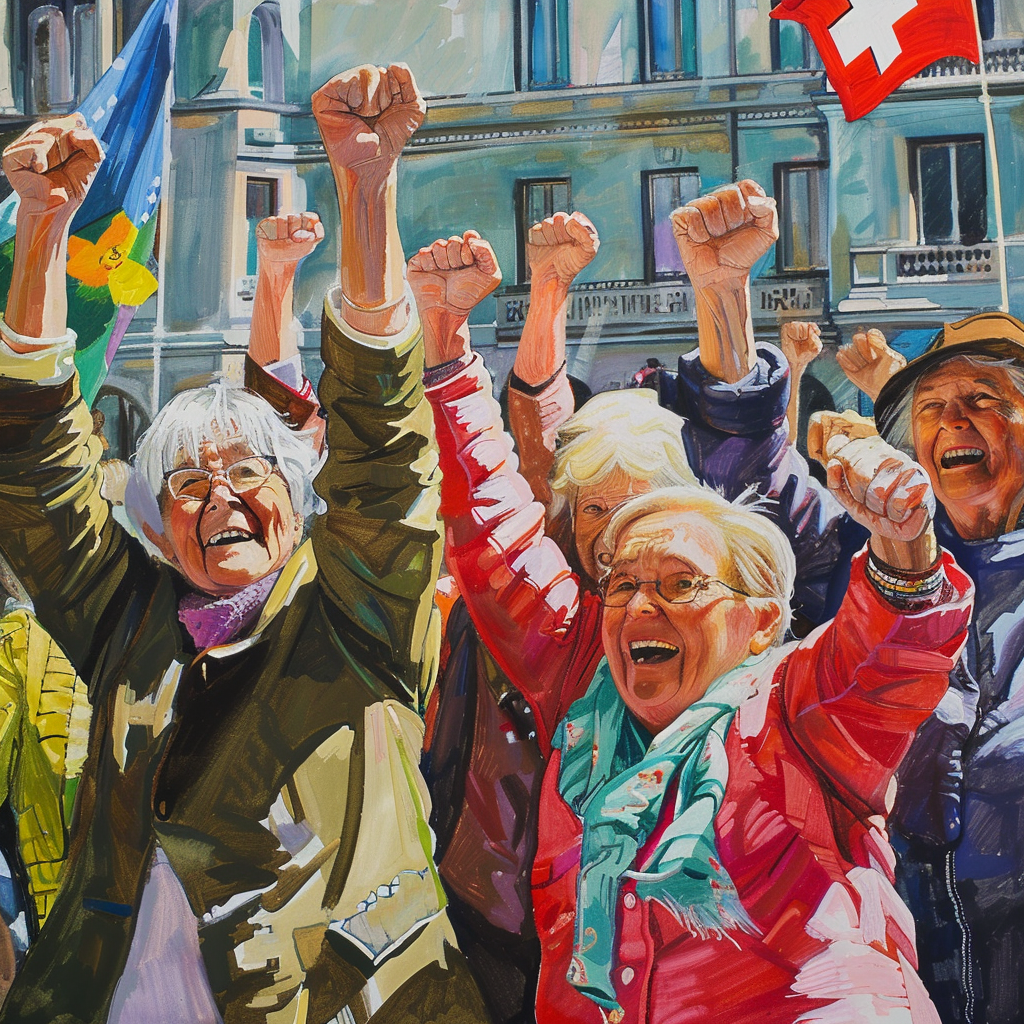
On the 9th of April 2024 the Swiss Senior Women for Climate Protection (Klimaseniorinnen) won a significant case in the European Court of Human Rights (ECHR). It ruled that their human rights had been directly violated by the Swiss government, which has failed to mitigate climate change, as local temperatures continue to rise.
Still, their victory was not easy, as the battle started eight years earlier, in 2016, when the first 44 Klimaseniorinnen filed their legal claim in Swiss courts.
In December 2020, after having each level of court in Switzerland reject their appeals, the Klimaseniorinnen filed their claim with the European Court of Human Rights – their final chance to achieve justice. And by the time they won their case this year, they had collected more than 2,500 women over the age of 64.
Together they have been able to move an international court for the first time to acknowledge that governments have an obligation, under human rights law, to meet their climate targets.
But this now raises the questions: What does this momentous win mean for the fight against climate change? And can the victory of the Klimaseniorinnen be repeated?
Reframing climate justice
The Klimaseniorinnen’s novel approach to framing climate change as a human rights issue can have drastic consequences, as governments often have much more concrete frameworks to protect human rights than to safeguard climate targets.
How is climate change a human rights issue?
According to the Universal Declaration of Human Rights, all humans have the right to live with dignity. This right is infringed through climate change, where extreme weather events threaten our lives, our incomes, and our cultures.
As governments have the legal obligation to protect their citizens, their inaction against climate change can be seen as negligence in fulfilling this obligation, which is a human rights violation.
While there are international obligations for countries to combat climate change, such as the Paris Agreement, countries do not have a legal obligation to stick to a particular goal. This has resulted in significant gaps in levels of climate action depending on countries’ political agendas.
But now, with the increasing disasters we are witnessing throughout Europe, including heat waves, droughts, and flooding, campaigners have turned to framing climate change as a human rights issue.
Building on the Klimaseniorinnen’s success
Obviously, the Klimaseniorinnen’s fight was neither short nor easy, spanning eight years and involving more than 2,500 participants. But, their triumph has instilled renewed hope for environmental activists around the world that there are legal avenues to combat climate change. In fact, examples from other countries also show how powerful legal battles can be in holding governments accountable and boosting climate action.

Earlier this year, the Norwegian government and BP lost a court case against climate groups, forcing them to close the Breidablikk offshore oil field after only four months of operation and halt the development of two other ones. The winning legal argument was that the long-term harm from carbon emissions has not been sufficiently calculated.
And in 2019, the Dutch Supreme Court already ruled in favour of climate activists’ argument that climate change is a human rights question and that the government has a legally enforceable duty to take action. A separate victory by lone activist Johan Vollenbroek in the same year forced the Netherlands to scramble to meet their new legal climate obligations, sparking a “nitrogen crisis” in the country as they worked to adjust their economic reality to their climate responsibilities.
Although there are many domestic legal victories like those in the Netherlands and Norway, the Klimaseniorinnen’s fight took the legal battle to a new scale. Their victory on the international stage means that citizens across 46 European states can now challenge their governments to strengthen climate policy based on human rights obligations. Additionally, it creates legal precedent that could result in stronger international legal commitments to climate action. International protection against climate change-related human rights violations would create a lifeline for vulnerable communities especially hard-hit by climate-induced disasters.
Climate justice: a new tool against a wicked problem
Ultimately, what these climate activists have proven in courts across the continent is that citizens now have a new democratic tool for holding governments and big emitters accountable.
And with more than 70 climate cases already active against governments in 2022, the victories we have now witnessed, are, as Greta Thunberg described, “only the beginning.”
